Written by Cameron Hardy and Coby Coonradt, illustrated by Victoria Stebleva (pub. Neon Squid, 2026)
Can you build a fire? Filter water? Make shelter from plastic and duct tape? These skills aren’t just cool – they’re lifesavers. Start learning small stuff now, such as how to use a compass and tie knots. You don’t need to be an expert. You just need to start.
You just need to start – and this book is the perfect place to do so!
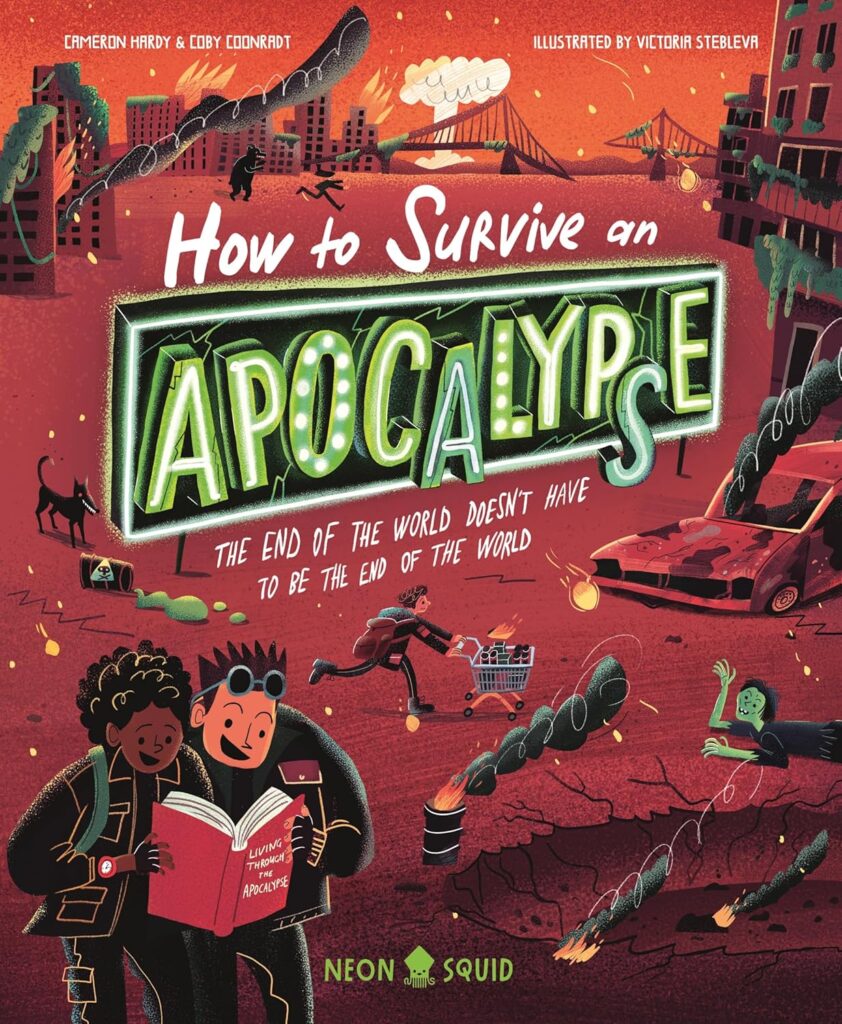
Written by the co-hosts of a podcast aptly named The Casual Preppers, this book is a treasure trove of handy information and suggestions, wrapped up in fun and colourful illustrations that make it a truly engaging read.
It’s the second in the Extreme Survival Guides series, the first being How to Survive on the Moon published in 2025. That one was written by Joalda Morancy, an actual rocket engineer who works on lunar lander programs, so it’s great to see the series continuing by using authors who are specialists in the books’ topics.
Each “chapter” is a double-page spread, with the writing laid out in bitesize chunks – sometimes as sub-topics, sometimes as a key that marks things in a larger picture, such as labelling areas in a survival stash. It all makes it very easy to read, allowing readers to absorb smaller pieces of information at a time.
The chapters don’t just cover specific scenarios, such as rogue AI or fire. Rather, the first few chapters deal with more general topics that are important to know ahead of a disaster, for example the different types of alerts you might hear, first aid basics, and what to pack in a survival bag.
I loved the illustrations in the book. They’re busy without being messy, and I found it good fun to follow them along with the text – especially to see what might be hiding in the background! The colours are bold and bright without being garish, and match the tone of the book: instructive, but light-hearted.
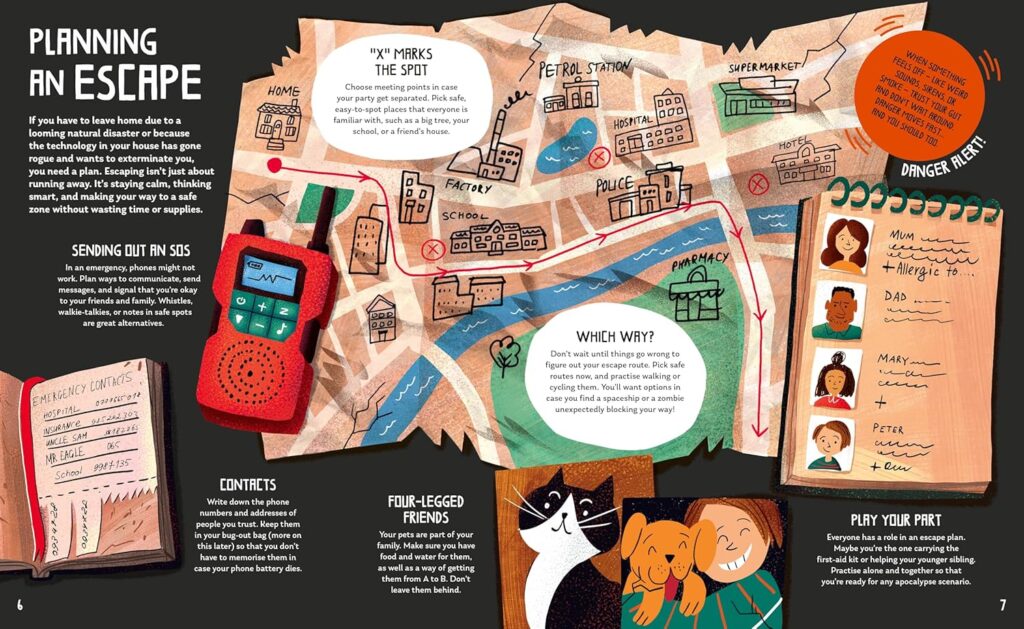
The book’s biggest strength in my opinion is its combination of the serious and the ridiculous. It’s a clever way to teach children important survival skills; by moving between demons, civil unrest, alien invasions, etc., it gives the topic a bit of levity that can make it less scary to read. And even the silly situations contain useful information that younger readers might otherwise find overwhelming.
Being in the UK, there may be some bits that are lost on our young readers – we’re not really known for earthquakes here, and bunkers are few and far between – but much of the information can still be useful across multiple situations. The very essence of being prepared is because you don’t know what the future might throw at you.
It actually got me thinking about my own survival skills…or rather my lack of them. Yes, I may be unlikely to face down a tornado anytime soon, but maybe I should still learn how to light a fire, and pick myself up a wind-up radio for those long walks in the Scottish Highlands. As they said, I don’t need to be an expert – I just need to start!
If you want to prepare for the end times, you can grab a copy of How to Survive an Apocalypse at the link below.
(Disclosure: If you buy books linked to our site, we may earn a commission from Bookshop.org, whose fees support independent bookshops.)
Looking for other books on disasters? Check out our previous reviews here.
